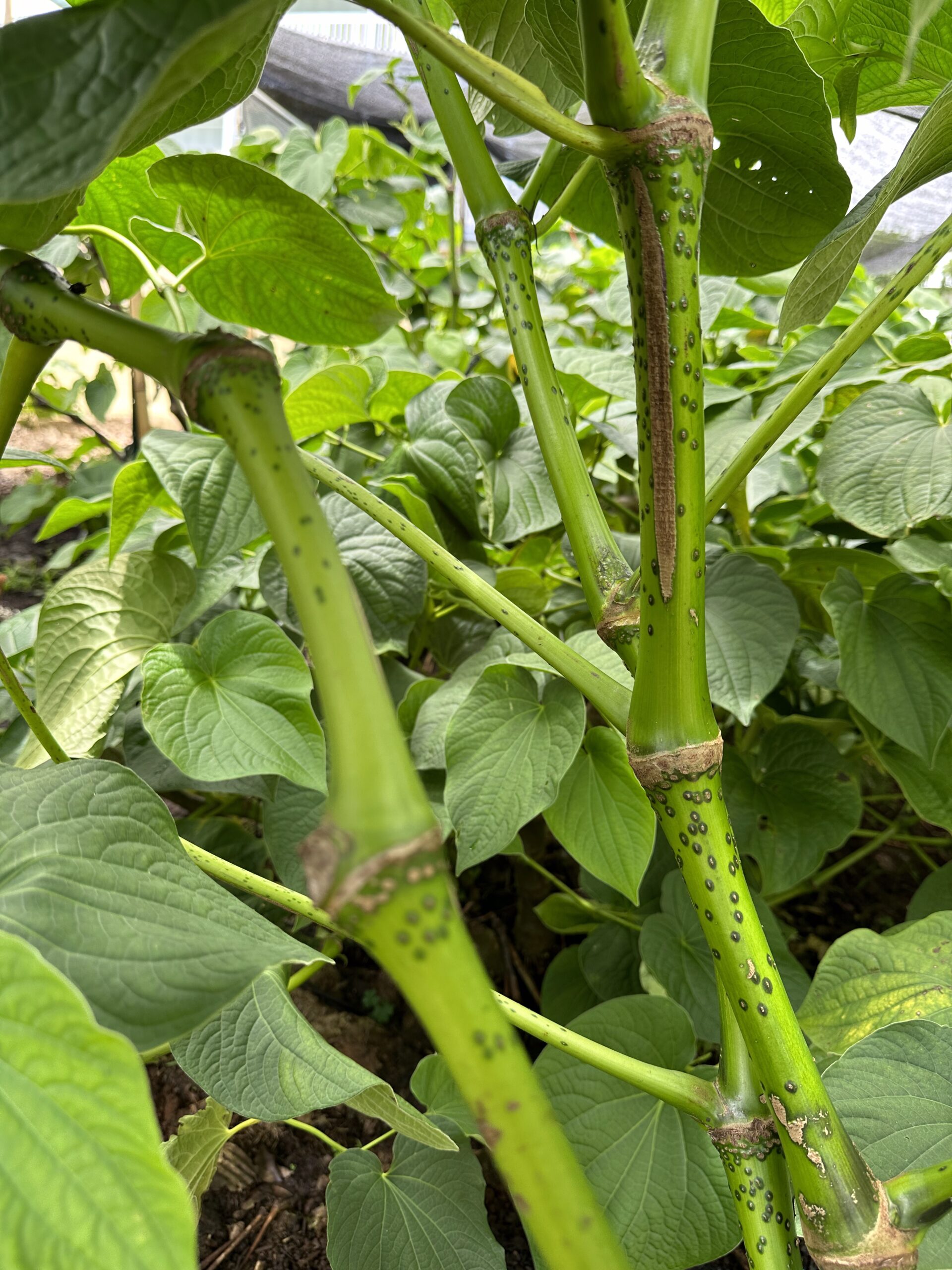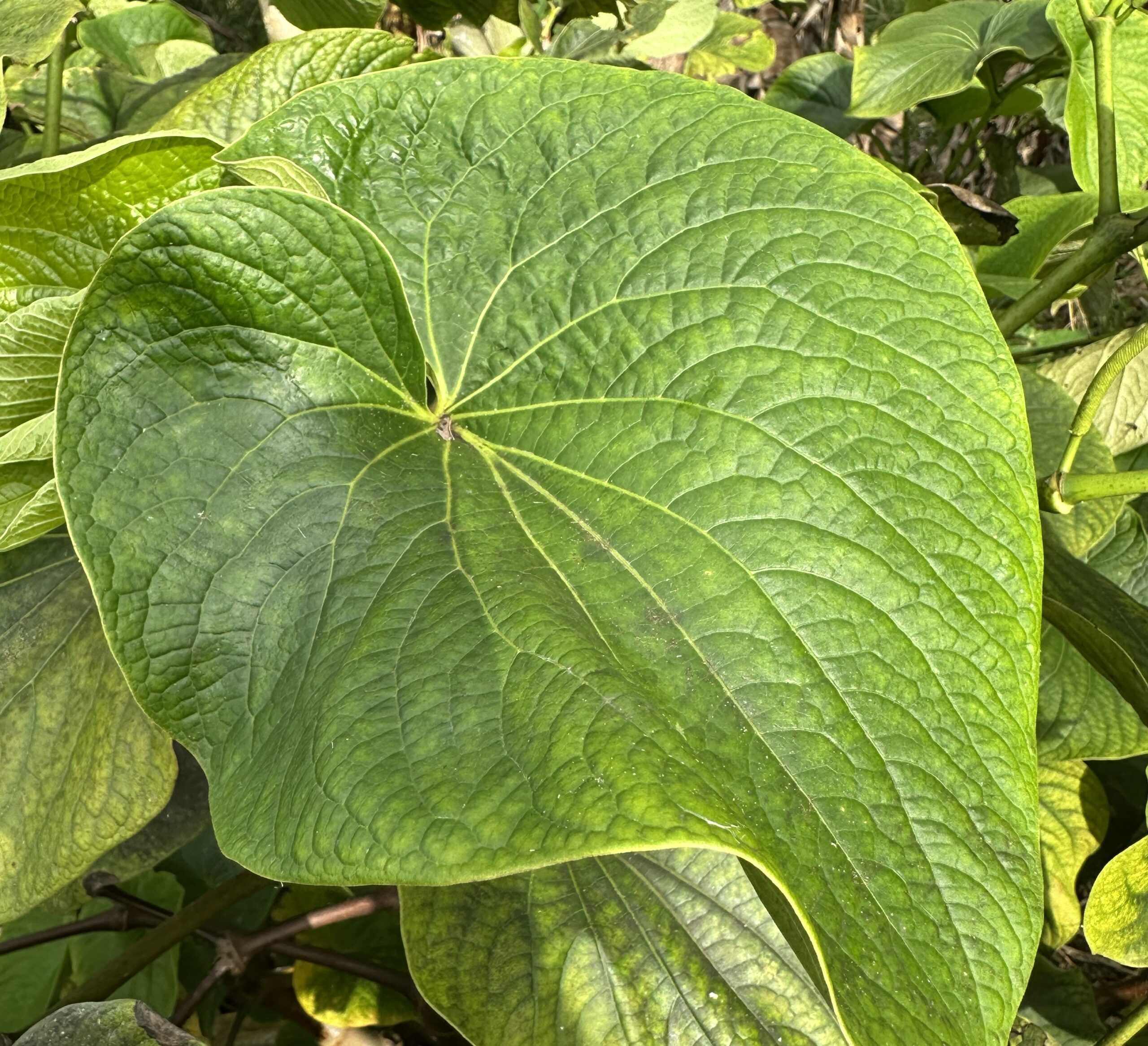

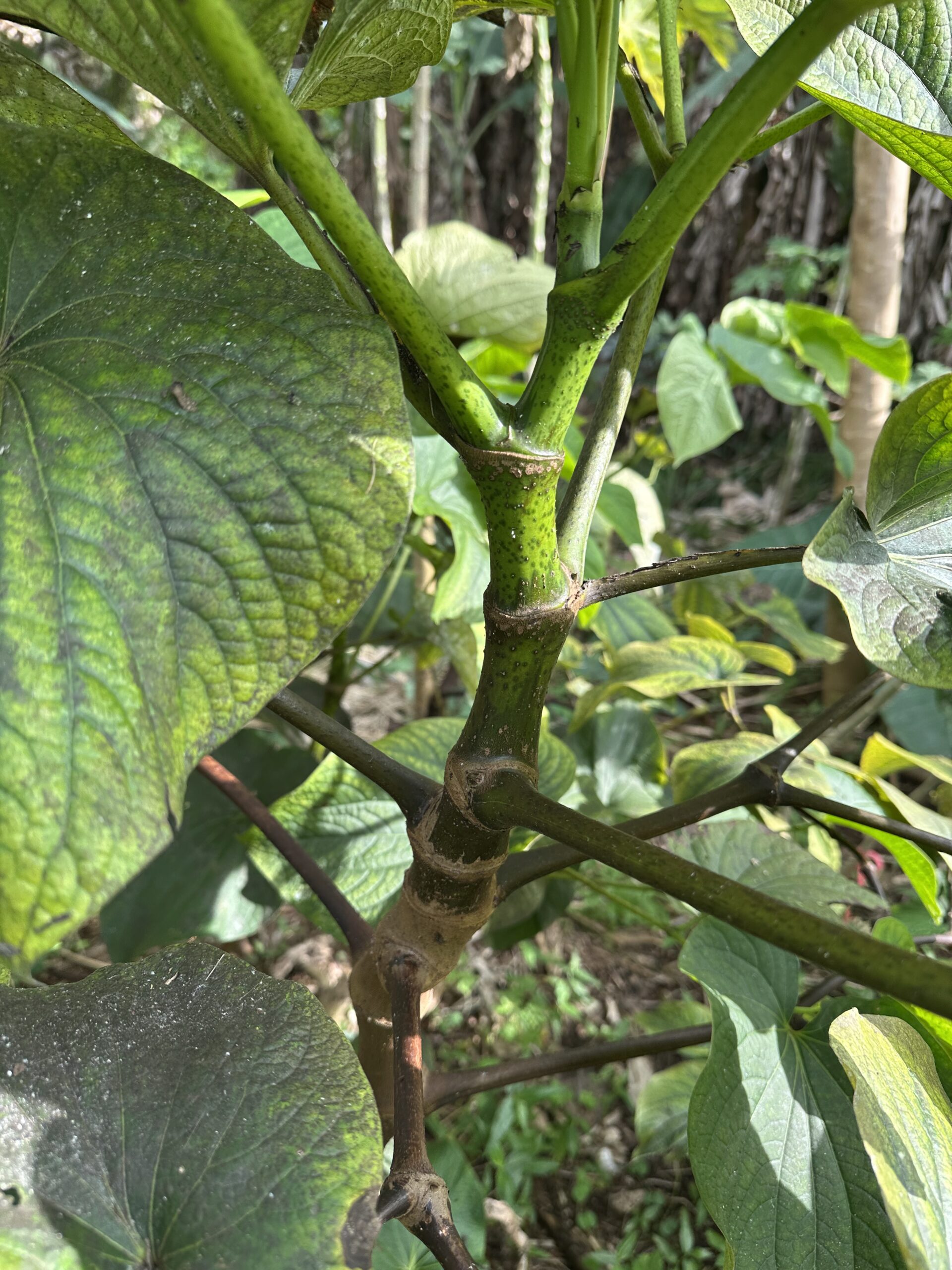
Many people assume kava should be grown in deep tropical shade.
That is only partially true.
Kava is shade tolerant, especially during early establishment, but excessive shade can reduce vigor and increase disease pressure. Successful production depends on balance rather than maximum canopy cover.
Young plants benefit from protection during establishment.
Partial shade helps reduce moisture stress and environmental shock while root systems develop. Nursery systems often use substantial shade during early growth before gradually acclimating plants to brighter field conditions.
But too much shade creates problems.
Dense canopy conditions trap humidity and reduce airflow around the plant base. In Hawaiʻi’s humid climate, this increases the likelihood of fungal disease and long-term decline.
Light management also influences plant growth and chemistry.
Research in Hawaiʻi production systems has shown that moderate shade conditions may support healthy growth, while excessive shading can reduce kavalactone yields. Productive systems balance protection, airflow, and sunlight rather than maximizing one factor alone.
Agroforestry systems can work well for kava when properly designed.
Managed tree canopies,
careful spacing,
and controlled light penetration
allow growers to combine environmental protection with healthy airflow.
Windbreak placement also matters.
Windbreaks planted too close to kava fields may create excessive shade while competing for water and nutrients underground.
One of the most common mistakes in tropical agriculture is assuming more shade always equals healthier plants.
In reality, successful systems create stability rather than darkness.
Good shade management protects young plants while still allowing airflow, light penetration, and long-term field health.