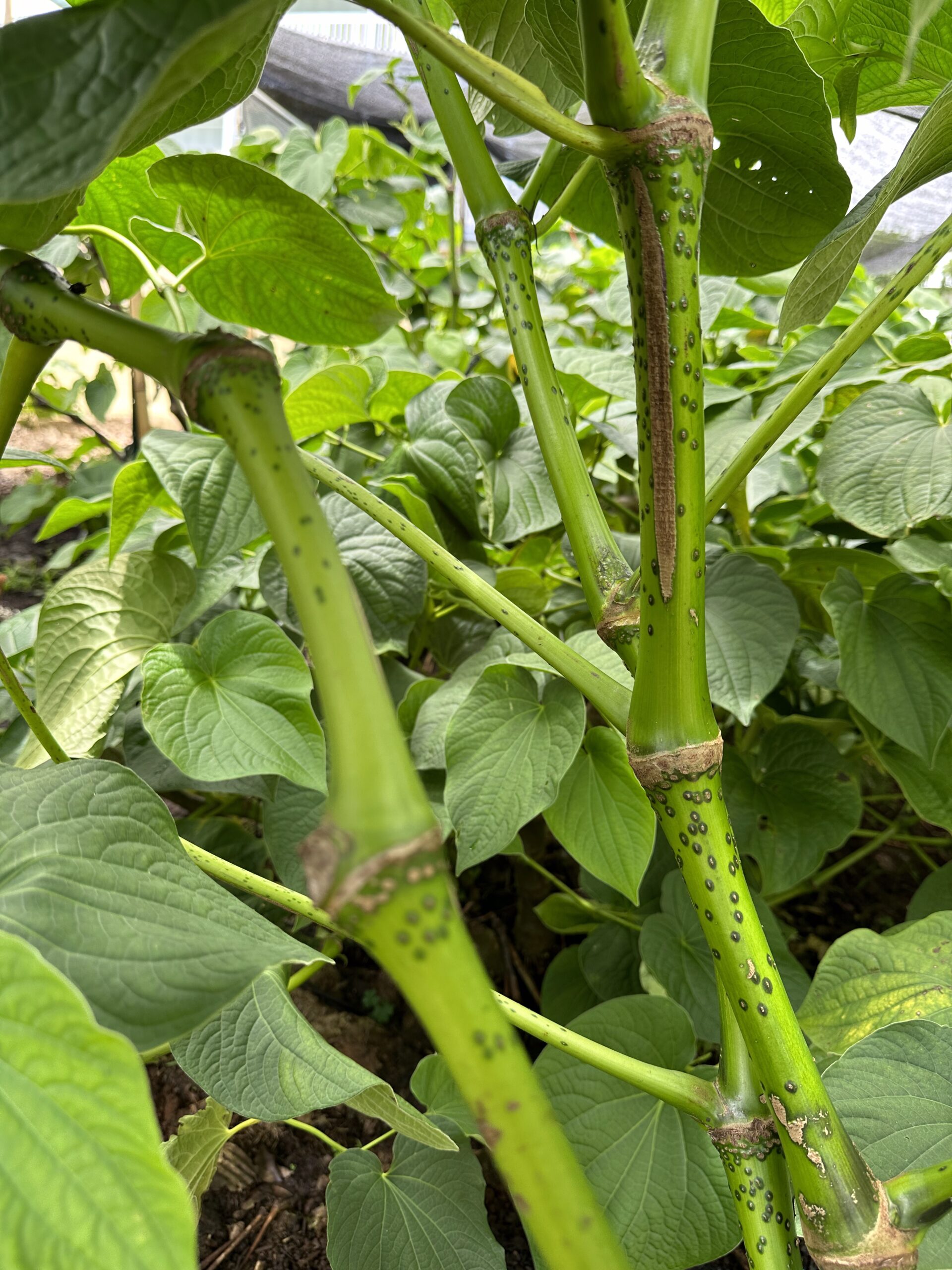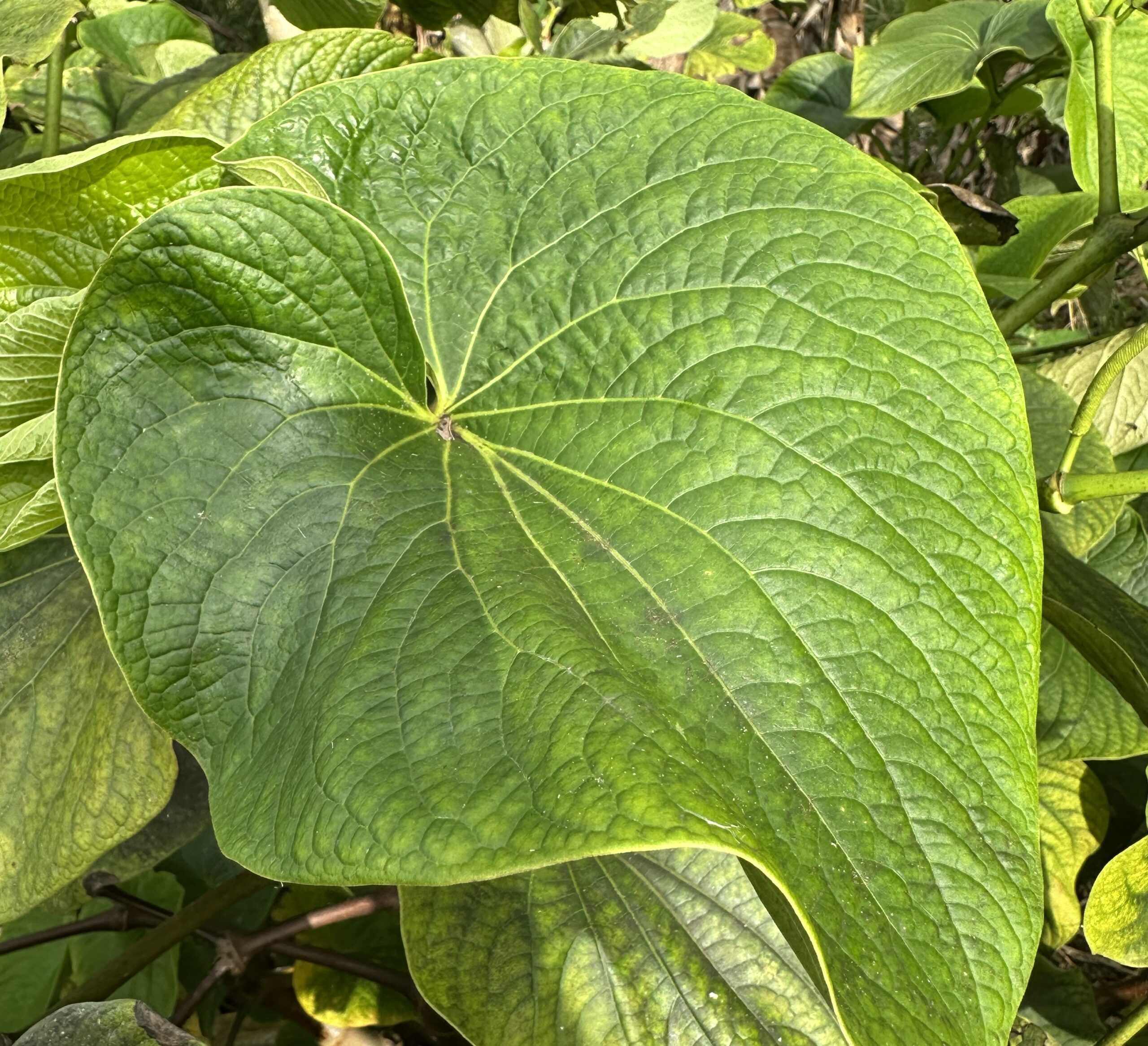

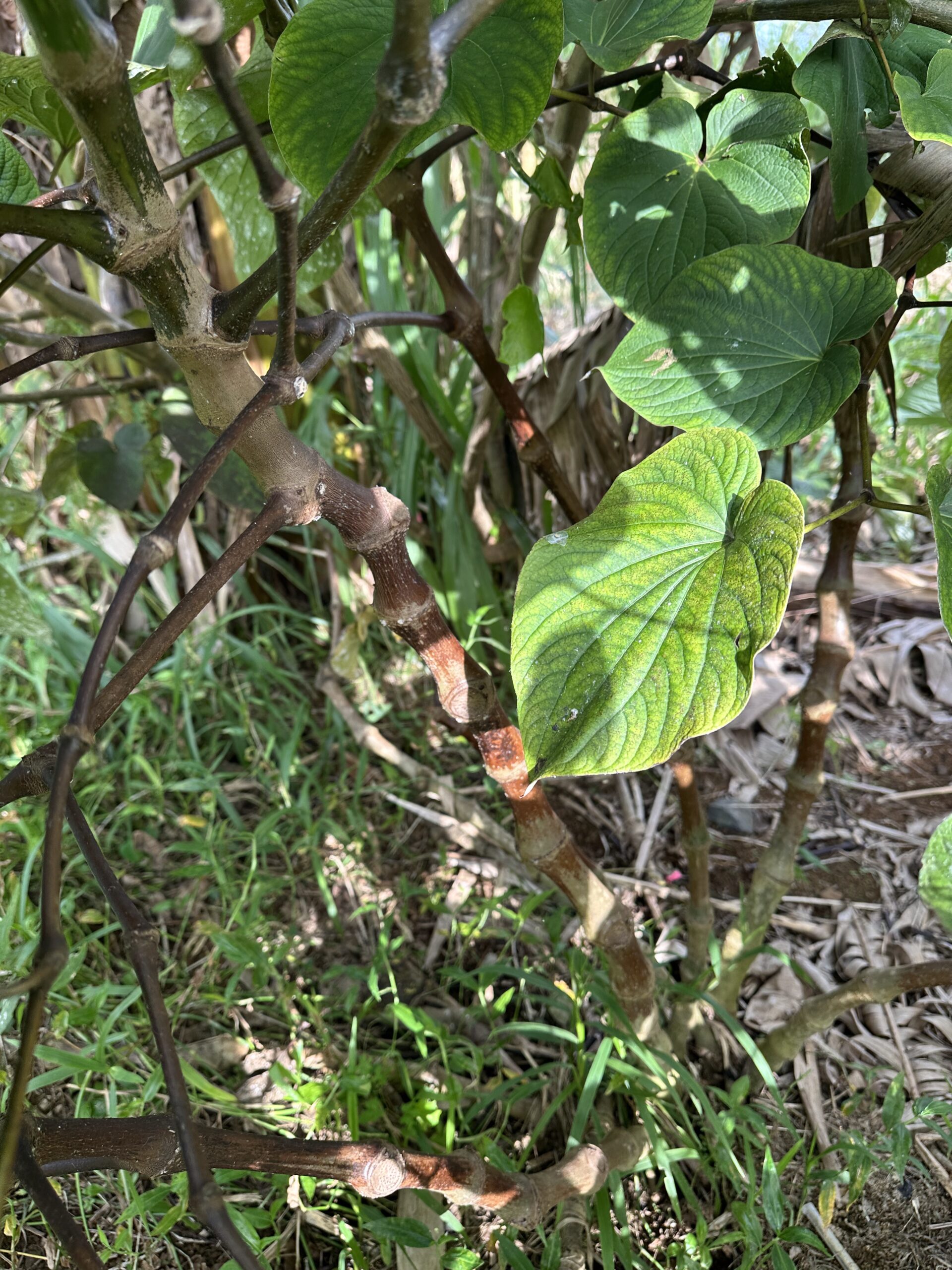
Many tropical crop failures begin underground.
Root diseases are often difficult to detect early because symptoms develop slowly and may not appear above ground until significant damage has already occurred.
By the time leaves yellow or plants decline visibly, the root system may already be severely compromised.
Kava demonstrates this problem clearly.
Poor drainage and prolonged soil saturation significantly increase the risk of root and basal stem diseases. Hawaiʻi’s humid climate and heavy rainfall can create ideal conditions for these problems when fields are poorly designed.
One reason root diseases become dangerous is that they remain hidden.
A plant may still appear vigorous while roots slowly deteriorate below the soil surface. This delays intervention and allows chronic stress to accumulate over time.
Several factors increase root disease risk:
standing water,
compacted soils,
poor airflow,
overwatering,
and excessive shade.
Many of these conditions are preventable through proper establishment practices.
Raised beds,
well-drained planting sites,
careful irrigation management,
and wider spacing
all help reduce disease pressure.
Healthy roots influence nearly every aspect of plant performance.
Water uptake,
nutrient absorption,
disease resistance,
growth rate,
and long-term productivity
all depend on root health.
In tropical agriculture, growers often focus heavily on visible plant growth while underestimating underground conditions.
But roots are infrastructure.
And once root systems fail, recovery becomes far more difficult.
For Hawaiʻi growers, understanding root health is not optional.
It is one of the foundations of sustainable production.