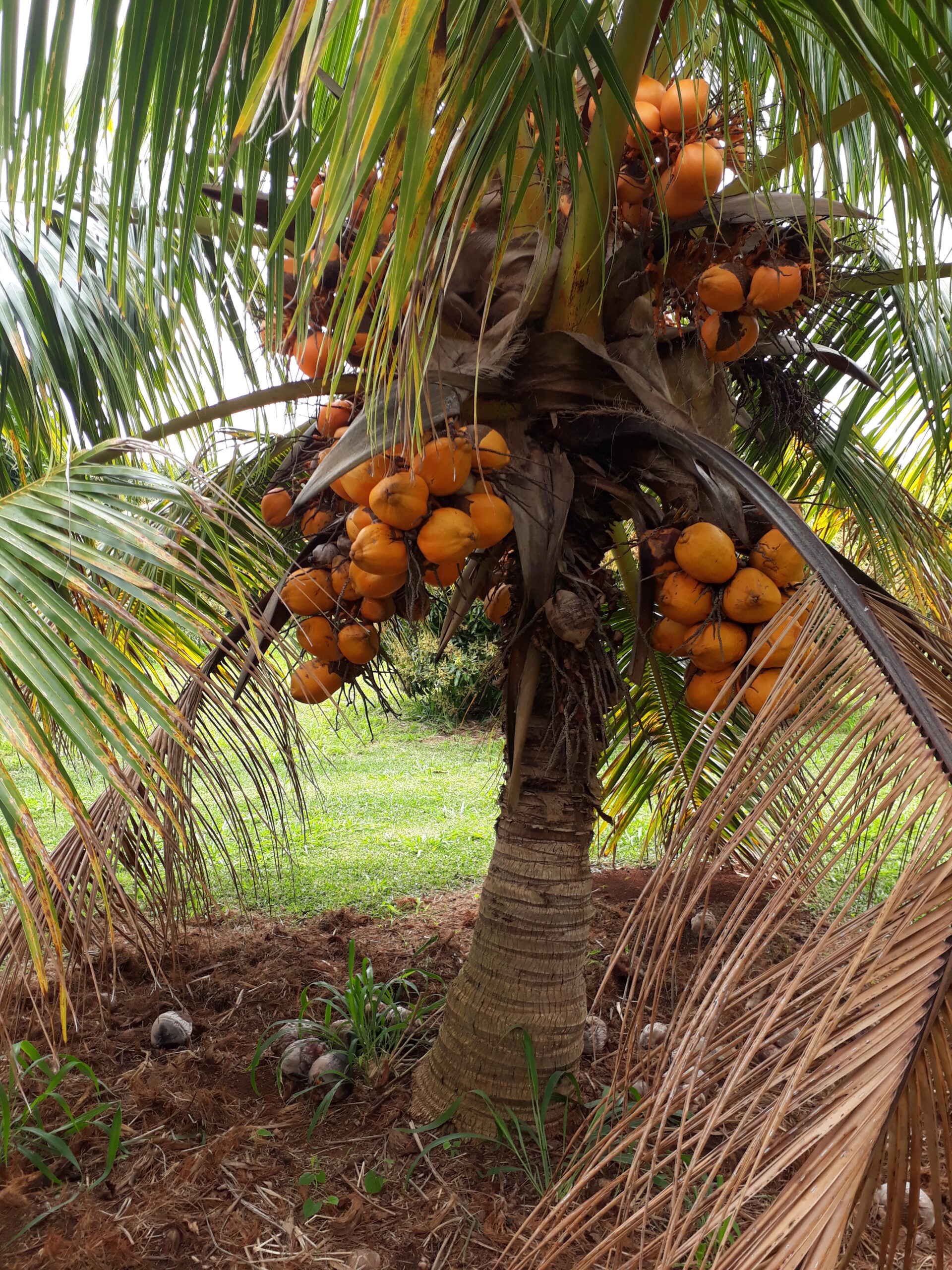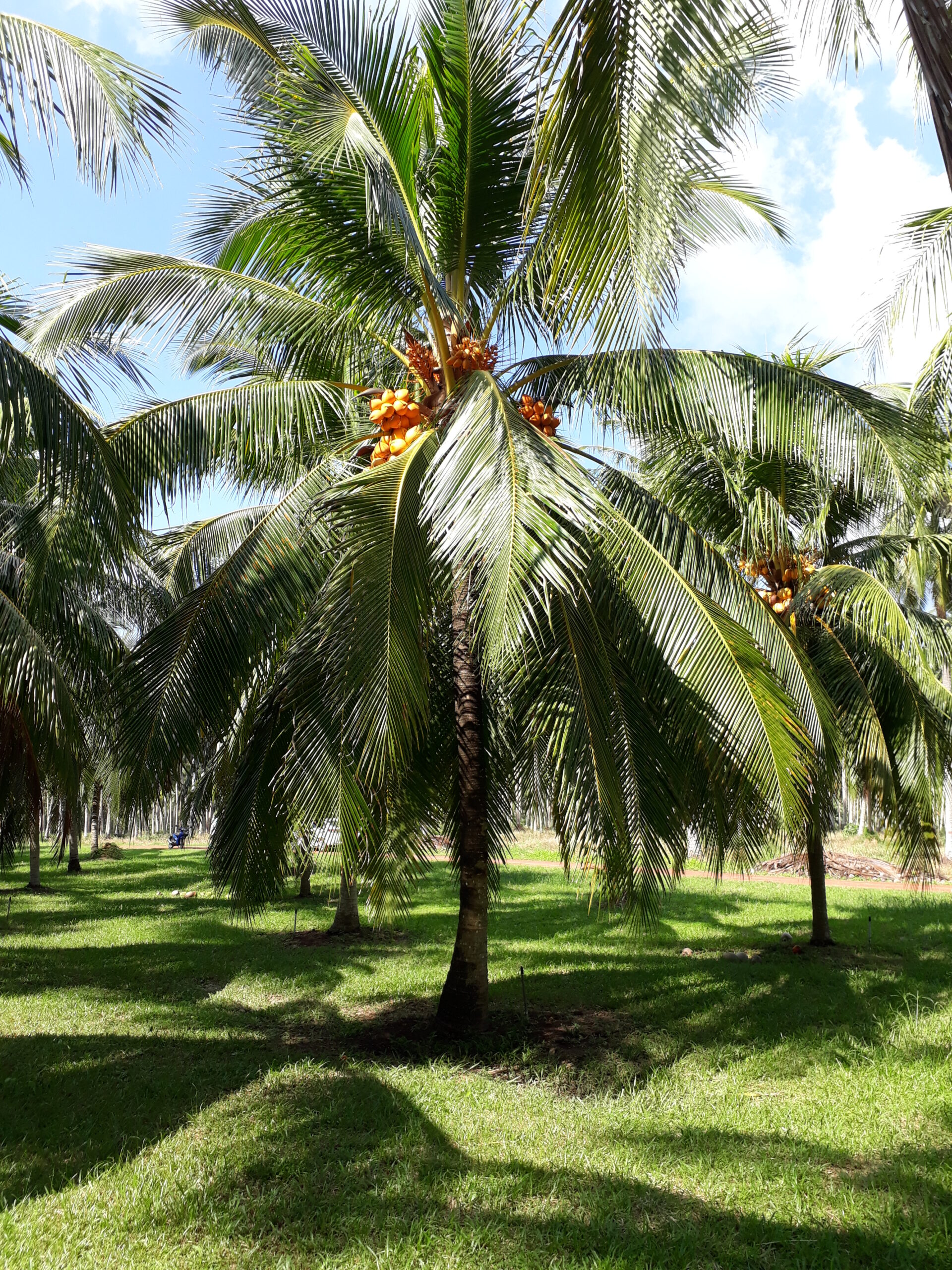

Coconut palms (Cocos nucifera) are one of the most recognizable and valuable trees in the tropics. Across the Pacific they are often called the “tree of life” because nearly every part of the plant has a use—from food and drink to fiber, building material, and medicine.
For farmers, homesteaders, and backyard growers in Hawaiʻi, starting coconuts from seed is surprisingly simple. Unlike many crops that require grafting or specialized propagation, coconuts naturally reproduce from the whole nut itself.
At Malama Sanctuary we often remind people of an important principle:
A coconut is already a nursery.
Inside the husk is a complete plant embryo, surrounded by stored food and water that sustain the seedling during its first months of life.
This guide explains the basic process.
1. Choosing the Right Seednut
The first step is selecting a viable coconut.
Look for:
• Fully mature nuts that have fallen from the tree
• A nut where you can hear water sloshing when shaken
• A heavy, intact husk with no cracks or rot
Extension guidance recommends using fresh fallen nuts with the husk still attached, because the husk protects the developing seedling and helps regulate moisture during germination.
A mature coconut typically weighs around 6 pounds, and a healthy tree can produce dozens of nuts per year.
2. Pre-Soaking the Nut
Before planting, soak the coconut in water.
How to do it
- Place the whole husked coconut in a bucket of water
- Soak it for 2–3 days
This softens the husk and accelerates germination by hydrating the embryo.
3. Planting the Coconut
Unlike many seeds, coconuts are planted whole.
Orientation matters
Plant the nut so that:
• It lies on its side
• Only the bottom third is buried in soil
Extension guidance specifically recommends leaving most of the nut exposed above the soil surface. Watson – C1-478
Why this matters
The sprout emerges from the soft “eye” of the coconut, and planting too deep can slow or prevent emergence.
4. Soil and Site Conditions
Coconut palms prefer:
• Well-drained soil
• Warm temperatures (around 80°F or higher)
• Regular water
• Partial sun when young
In tropical climates with adequate rainfall, coconuts sometimes germinate naturally where they fall.
The root system develops in the upper layers of soil and spreads horizontally, so good drainage is essential.
5. Watering
Young coconuts need consistent moisture.
Water deeply once or twice per week, keeping the soil moist but not waterlogged.
Extension guidance notes that as long as the soil drains well, it is difficult to overwater a germinating coconut.
6. Germination Timeline
Coconuts germinate slowly.
Typical timeline:
| Stage | Approximate Time |
|---|---|
| Roots begin emerging | ~3 months |
| First shoot appears | 3–6 months |
| Early leaves develop | first year |
| Trunk formation begins | ~5 years |
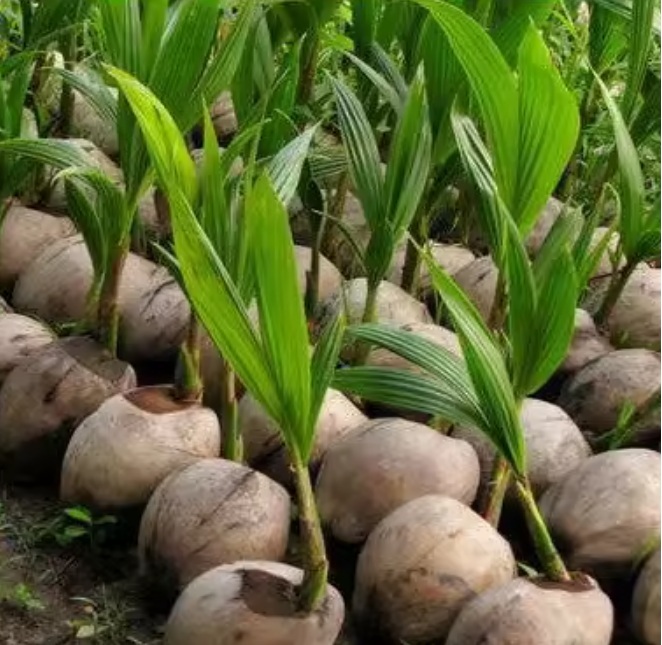
The first leaves appear as simple spear-shaped leaves before developing into the familiar feather-like palm fronds later.
7. What Happens Inside the Nut
The coconut is not just a seed—it is a complete growth system.
Inside the shell:
• The embryo begins to grow
• The meat and water feed the young plant
• Roots push through the husk into the soil
This stored nutrition supports the seedling during its first year before it begins relying primarily on soil nutrients.
8. When to Transplant
Once the seedling produces several leaves and roots are well established, it can be transplanted to its permanent location.
Choose a site with:
• full sun
• good airflow
• well-drained soil
Coconut palms are long-lived trees that can produce fruit for 70 years or more, depending on the variety.
A Farm Observation from Malama Sanctuary
One of the easiest ways to see how resilient coconuts are is simply to walk under a mature tree after a rainy season.
On our farm we often find coconuts that have already sprouted on the ground, sending out a green spear from the husk while still lying in the grass.
Nature is already doing the propagation.
All the farmer has to do is recognize it.
We often pick up these naturally sprouted coconuts and move them into nursery beds where they grow into strong young palms.
Final Thoughts
Growing coconuts from seed is one of the most accessible forms of tree propagation in the tropics.
The steps are simple:
- Select a mature seednut
- Soak for a few days
- Plant the husked nut partially buried
- Keep warm and watered
- Wait patiently
In time, that single coconut can become a tree that produces fruit for decades.
At Malama Sanctuary we see coconut palms not just as crops, but as long-term agricultural infrastructure—trees that feed people, stabilize landscapes, and anchor tropical farming systems.
And it all starts with one seednut
This material is based on work that is supported by the National Institute of Food and Agriculture, US Department of Agriculture, under award number 2023-38640-39571-WS1FR through the Western Sustainable Agriculture Research and Education program under project number G279-24-WA507. USDA is an equal opportunity employer and service provider. Any opinions, findings, conclusions, or recommendations expressed in this publication are those of the authors and do not necessarily reflect the view of the US Department of Agriculture.