
Introduction: The Threat to Hawaii’s Iconic Palms
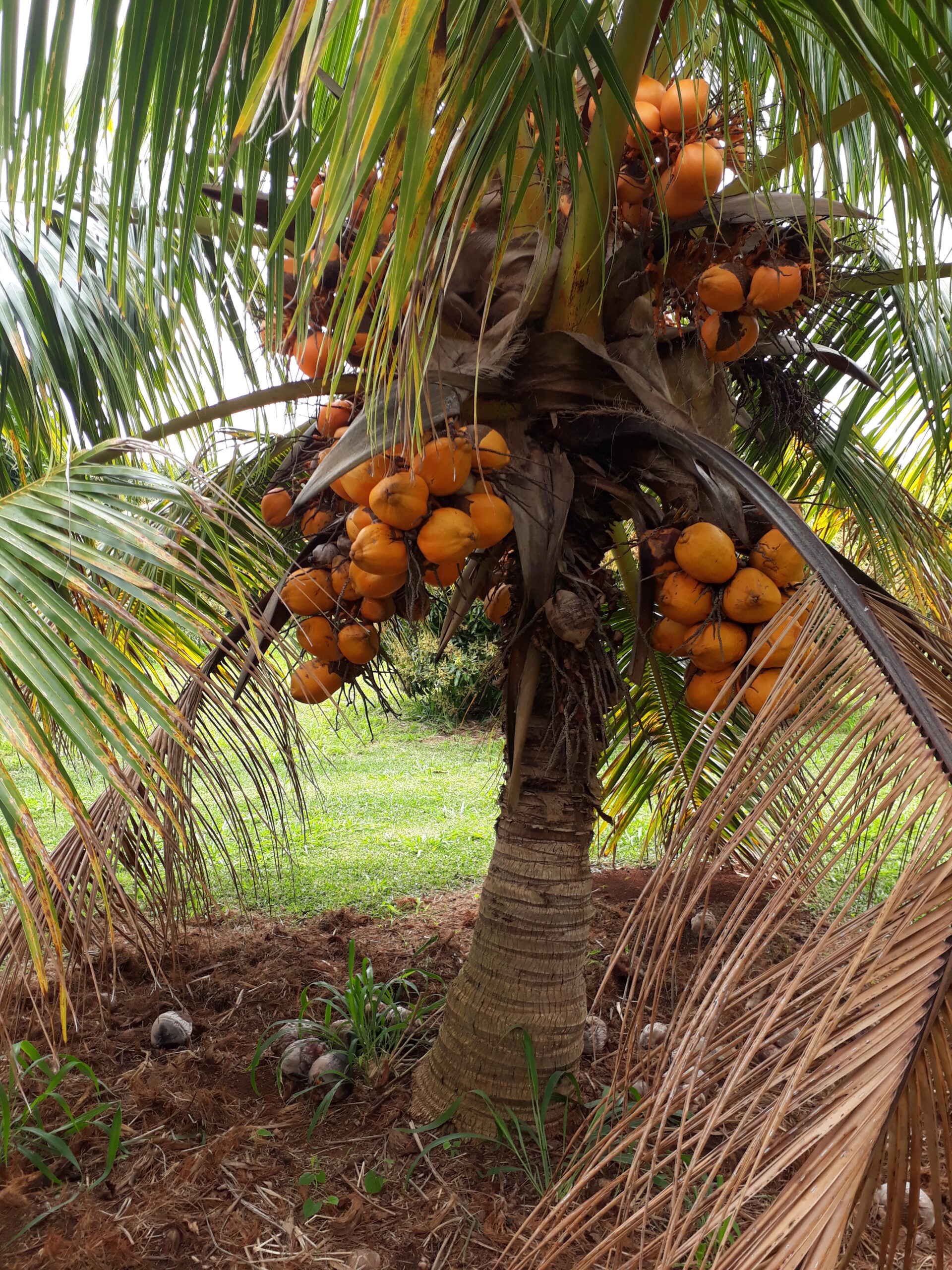
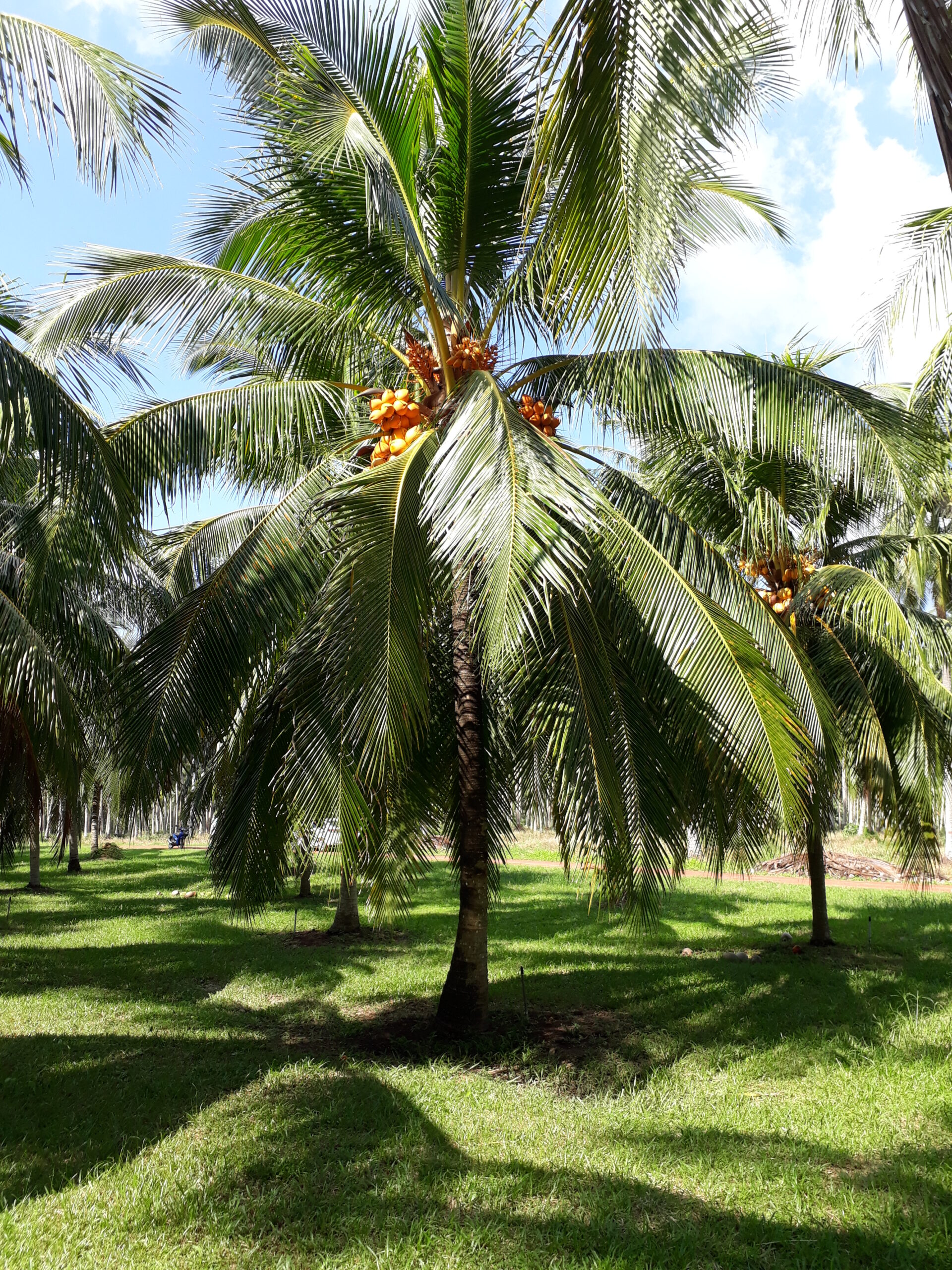
Coconut palms are integral to Hawaii’s ecosystems, agriculture, and cultural heritage. However, these iconic trees face a significant threat from the Coconut Rhinoceros Beetle (CRB), an invasive pest first detected in Hawaii in 2013 (Moore, 2021). CRBs damage palms by boring into the crown and disrupting the growing point, which can lead to the death of mature trees within months. The beetle has established a presence on Oahu, with detections on other islands, making early detection and rapid response critical for preventing further spread and protecting Hawaii’s palm populations.
This publication provides detailed, science-based information on identifying, preventing, and managing CRB infestations. These strategies are designed to be practical and implementable for Hawaii’s residents and land managers.
How to Identify Coconut Rhinoceros Beetle Damage
Timely identification of CRB damage is essential to mitigating the spread of this pest. The following signs are key indicators of CRB activity:
Visual Indicators of Infestation
- V-shaped cuts in fronds: Look for distinctive notches in emerging fronds, caused by beetles chewing through folded fronds that later unfurl (Gurr & You, 2021).
- Large boreholes: Check for holes approximately the diameter of a finger at the base of fronds or in the crown. Plant material or brown fluid may be visible around these entry points.
- Wilting or dying fronds: As damage progresses, fronds may yellow and die, with the crown collapsing, creating a characteristic flat-topped appearance.
- Presence of beetles or larvae: Adult beetles are large, measuring about 2 inches long, with males possessing a horn. Larvae are cream-colored grubs with brown heads, typically found in decaying organic material nearby (Gurr & You, 2021).
Report any symptoms to the Hawaii Department of Agriculture or the CRB Response Team.
Preventing CRB Infestation
Prevention is the most effective way to manage CRB populations. The following actions can help reduce the risk of infestation:
Sanitation Practices
- Remove and properly dispose of dead coconut palms, stumps, and decaying vegetation, as these provide breeding grounds for beetles.
- Chip green waste into pieces smaller than one inch.
- Compost organic material at temperatures exceeding 140°F to eliminate all life stages of the beetle (USDA APHIS, 2019).
Physical Barriers
- Install fine mesh or netting around young palm crowns to prevent beetles from accessing them.
- Apply smooth metal collars (at least 3 feet high) around palm trunks to deter beetles from climbing.
- When mulching, keep organic material away from the base of palms, and avoid piling mulch deeper than 4 inches.
Landscape Management
- Properly manage green waste to avoid creating beetle breeding sites.
- Consider replacing highly susceptible palm species in high-risk areas.
- Maintain tree health through proper nutrition and watering to improve resilience against pests.
Monitoring & Trapping Strategies
Regular monitoring is crucial for early detection and management of CRB infestations. The following methods are effective for monitoring beetle populations:
Pheromone Traps Pheromone traps attract adult CRBs by using aggregation pheromones combined with food attractants. These traps are highly effective for monitoring beetle populations (Ramle et al., 2005).
How to Use Pheromone Traps:
- Place traps in areas with palm trees, particularly near potential breeding sites.
- Check traps weekly and record the number of beetles captured.
- Dispose of captured beetles by freezing them or submerging them in soapy water for 24 hours.
- Replace attractants according to manufacturer instructions.
Pheromone traps can be purchased or constructed using guidelines available from local agricultural extension offices.
Reporting Protocol
- Report unusual beetle activity or high trap counts to the Hawaii Department of Agriculture.
- Contact the CRB Response Team at 808-CRB-INFO (808-272-4636) in Hawaii.
- Use the Hawaii Pest Report app to submit photos and location data.
- Document the date, location, and extent of damage to aid authorities in tracking the spread of CRB.
Biological and Chemical Control Methods
An integrated pest management (IPM) approach involves the use of both biological and chemical controls to target CRBs while minimizing environmental impact.
Biological Controls Metarhizium anisopliae, a naturally occurring fungus, infects and kills CRBs at all life stages. It is most effective in moist conditions and can be applied to breeding sites and traps (Bedford, 2013).
- Apply fungal spores to breeding sites and inside traps.
- The fungus takes 1-2 weeks to kill infected beetles.
- Commercial preparations of this fungus are available and should be applied according to the label instructions.
Chemical Controls In cases of severe infestation, targeted chemical treatments may be necessary (Waterhouse & Norris, 1987).
- Apply approved insecticides directly into active boreholes.
- Seal treated boreholes with tree wound dressing or clay to limit further beetle entry.
- Always follow safety guidelines and wear appropriate protective equipment during application.
- Keep children and pets away from treated areas.
Note: Broad-spectrum pesticides should be avoided, as they can harm beneficial insects. Chemical controls should only be used as part of a broader management strategy.
Community Action & Collaborative Management
CRB management is most effective when communities collaborate. Unmanaged properties can become breeding grounds that affect entire neighborhoods.
How You Can Help
- Report infestations to the CRB Response Team at 808-CRB-INFO.
- Educate others about CRB prevention and management strategies.
- Participate in community clean-up events to remove potential beetle breeding sites.
- Organize a neighborhood beetle monitoring program by coordinating trap placements and reporting findings.
- Share educational resources from the Hawaii Department of Agriculture and University of Hawaii Cooperative Extension.
Conclusion: Protecting Hawaii’s Palm Legacy
Through vigilant monitoring, prevention, and community collaboration, Hawaii’s coconut palms can be protected from the Coconut Rhinoceros Beetle. These palms are not only vital to our agricultural landscape but also to the cultural identity of the islands. By implementing science-based management strategies, we can help preserve this iconic species for future generations.
References
Bedford, G. O. (2013). Biological control of the coconut rhinoceros beetle. Annual Review of Entomology, 58, 307–325. https://doi.org/10.1146/annurev-ento-120811-153650
Gurr, G. M., & You, M. (2021). Invasive Coconut Rhinoceros Beetle: Biology and Detection. BioControl, 66(1), 1–14. https://doi.org/10.1007/s10526-020-10012-y
Moore, A. (2021). Coconut Rhinoceros Beetle in Hawaii. University of Hawaii at Manoa, College of Tropical Agriculture and Human Resources. https://cms.ctahr.hawaii.edu/ercrb
Ramle, M., Norman, K., & Wahid, M. B. (2005). Control of Oryctes rhinoceros Using the Aggregation Pheromone. Journal of Oil Palm Research, 17, 57–66.
USDA APHIS. (2019). Guidelines for Composting to Control Coconut Rhinoceros Beetle Larvae. United States Department of Agriculture. https://www.aphis.usda.gov
Waterhouse, D. F., & Norris, K. R. (1987). Biological Control: Pacific Prospects. Australian Centre for International Agricultural Research.
This material is based on work that is supported by the National Institute of Food and Agriculture, US Department of Agriculture, under award number 2023-38640-39571-WS1FR through the Western Sustainable Agriculture Research and Education program under project number G279-24-WA507. USDA is an equal opportunity employer and service provider. Any opinions, findings, conclusions, or recommendations expressed in this publication are those of the authors and do not necessarily reflect the view of the US Department of Agriculture.